


Beginner Pottery Guide
For those who are new to using ceramic tableware, we sometimes hear questions like, “I’m not sure how to handle it,” or “How is pottery different from porcelain?”.
In this section, we’ll introduce some key points about the characteristics of pottery, so that even first-time users can enjoy it with confidence and peace of mind.
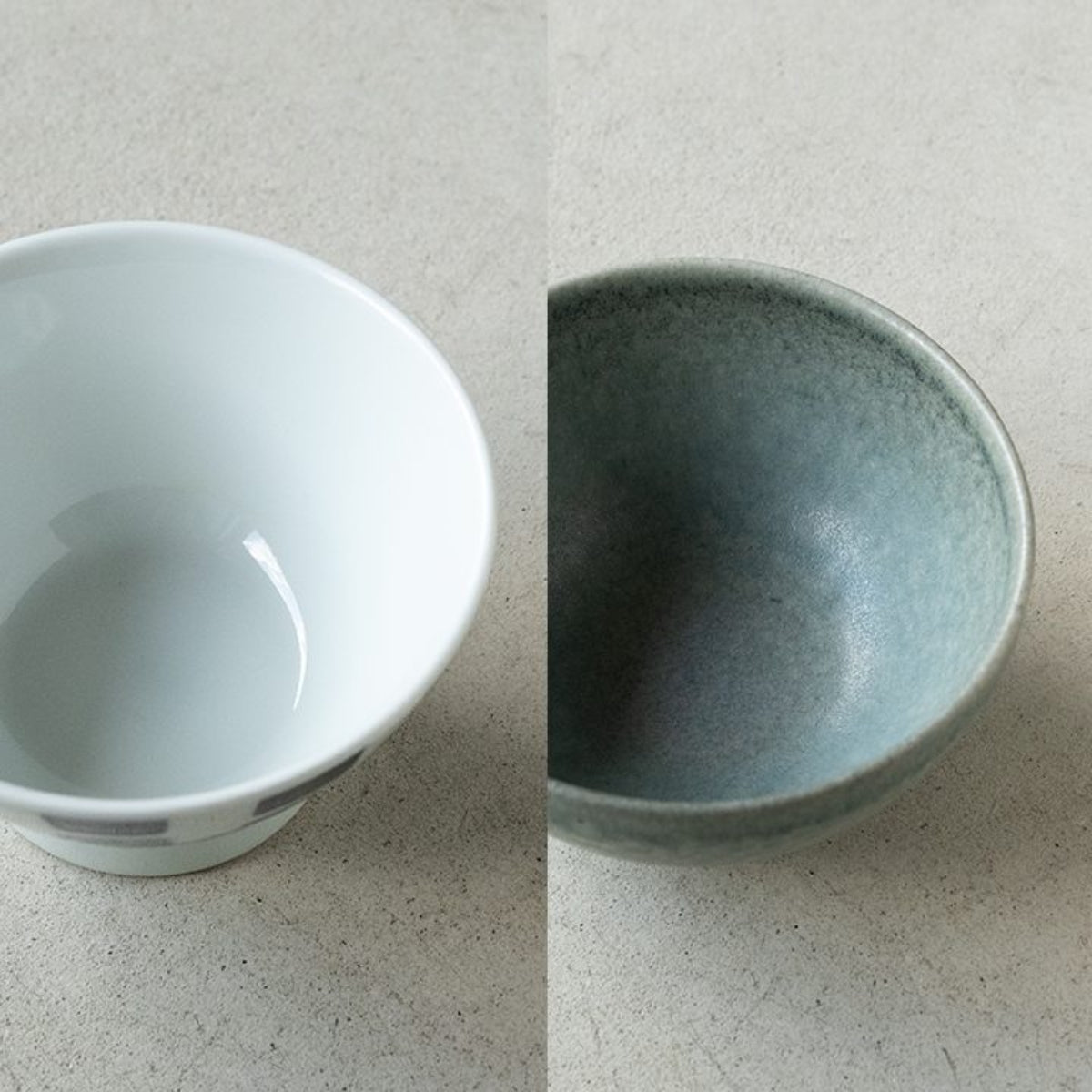
The Difference Between Pottery and Porcelain
Broadly speaking, tableware can be divided into two types: porcelain and pottery.
Porcelain is thin, white, and has a smooth, glossy surface.
Pottery, on the other hand, tends to be thicker, with a gentle, earthy texture that feels like natural clay.
There’s another key difference beyond appearance — absorbency.
Porcelain does not absorb water, while pottery does.
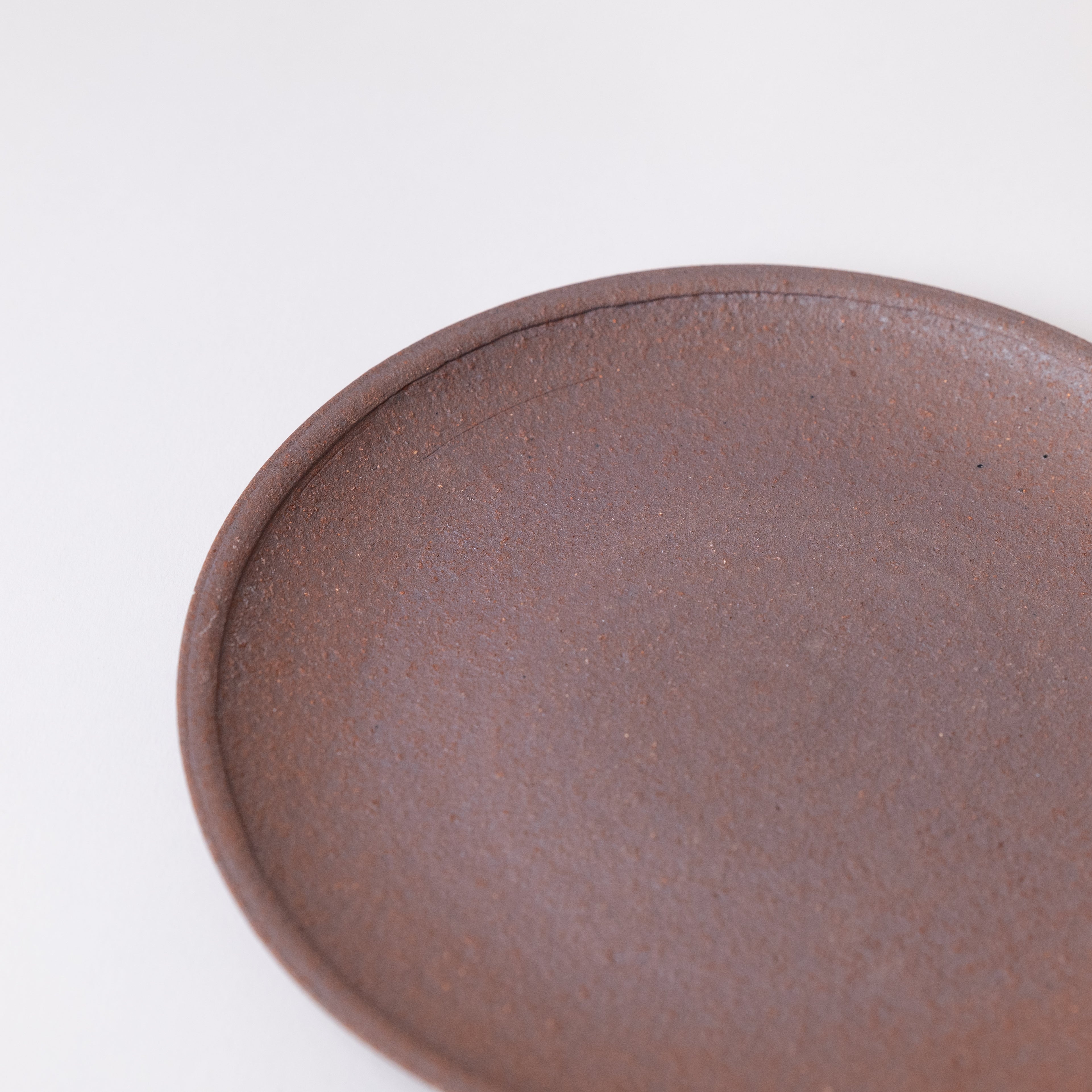
Pottery is made mainly from clay, while porcelain contains more stone.
Pottery is fired at around 1,200–1,300°C, whereas porcelain is fired at higher temperatures, above 1,300°C.
At these higher temperatures, the stone in porcelain melts into a glassy layer, sealing the surface and eliminating absorbency.
Pottery, with less stone content, remains porous, full of tiny air pockets that give it its characteristic warmth and texture.

Does Pottery “Breathe”?
Porous means having countless microscopic holes invisible to the eye.
This quality affects the way drinks and food feel — sake may taste milder, and beer poured into a pottery cup forms a finer, creamier foam.
Though pottery may look solid and still, it almost feels as if it “breathes” quietly through these tiny pores.
Caring for Pottery
Because of its porous nature, pottery gradually changes in appearance with use.
Like a sponge, it can absorb liquids, stains, or color pigments, especially on unglazed areas.
At Meizan, our tableware is treated to help reduce staining, but due to the nature of pottery, it cannot be completely prevented.
If discoloration occurs, you can try soaking the piece in enzyme-based bleach, though some stains may remain if they penetrate deeply into the clay’s pores.

Before

After
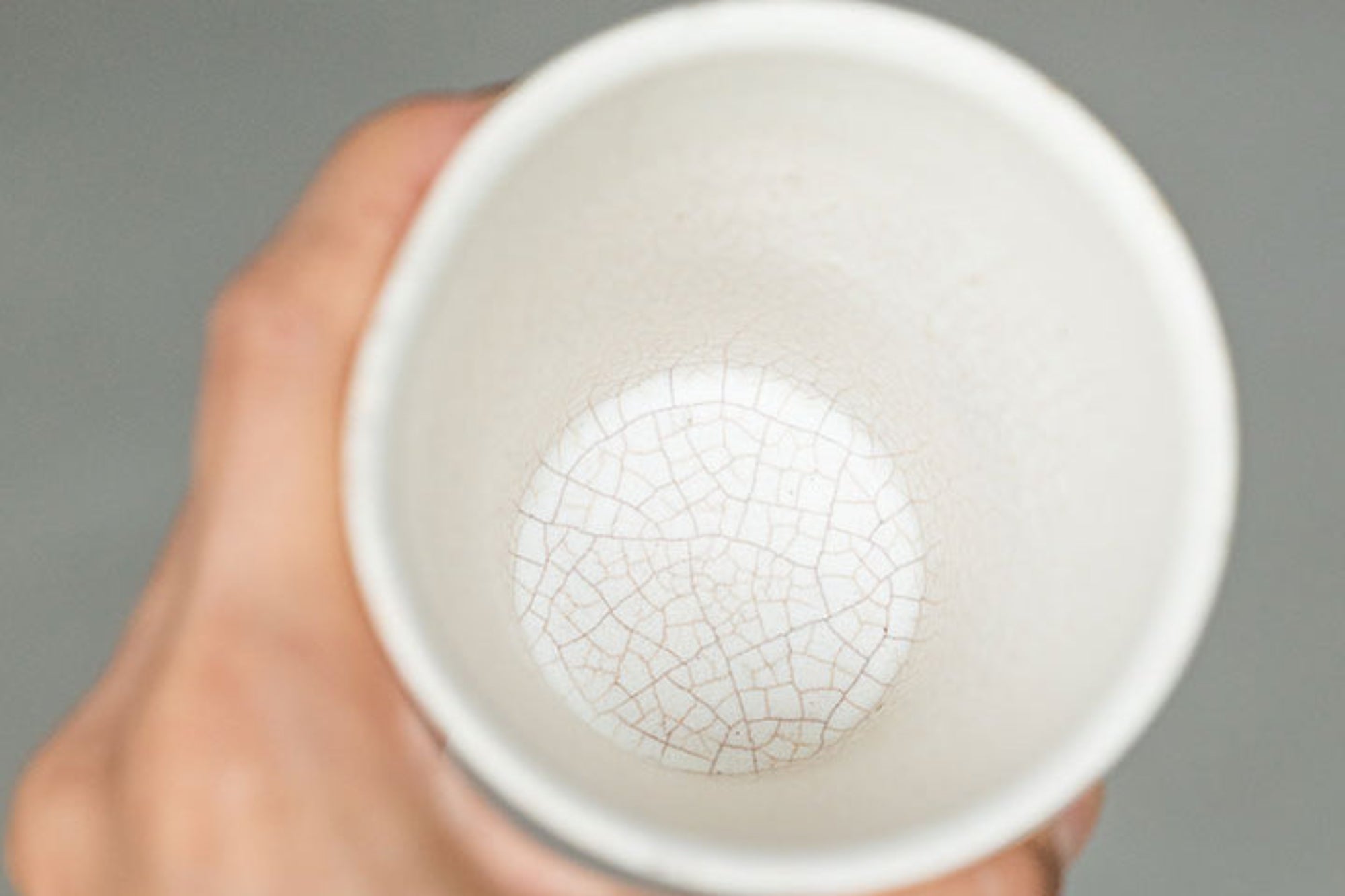
Glaze Crackling
Kannyū
Another place where stains may settle is in the fine crackle lines that sometimes appear on pottery surfaces.
This pattern is called kannyū and occurs when the glaze and the clay body cool and shrink at slightly different rates after firing.
The glaze contracts more than the clay, creating delicate, hairline cracks that add to the piece’s natural expression.
Tips for Everyday Use
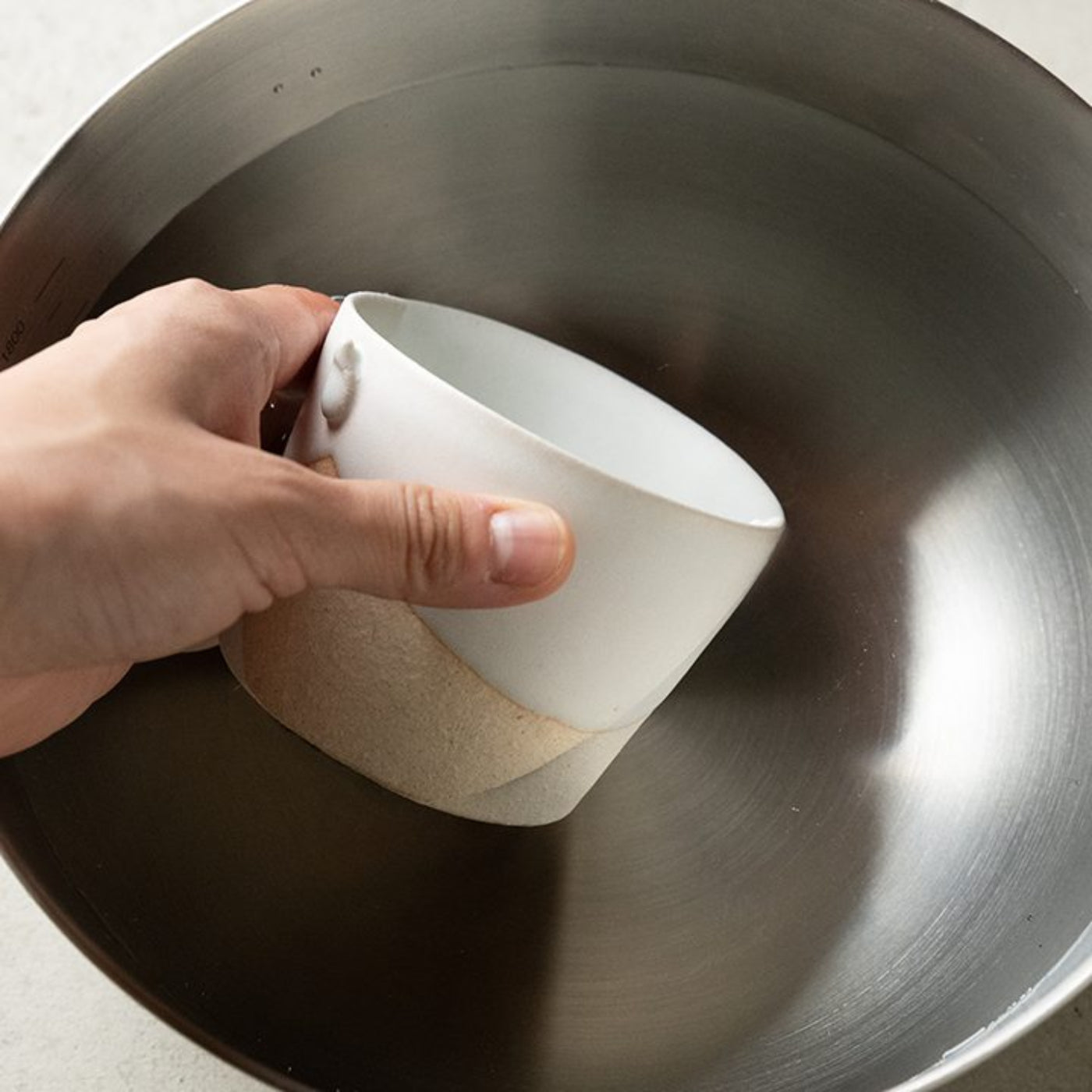
Keep Stains Away
To help prevent staining, lightly rinse or soak your pottery in clean water before serving food — especially for dishes like curry or berries that may leave color.
The absorbed water forms a thin barrier in the pores, making stains less likely to adhere.
After use, wash promptly rather than leaving the piece soaking for long periods.
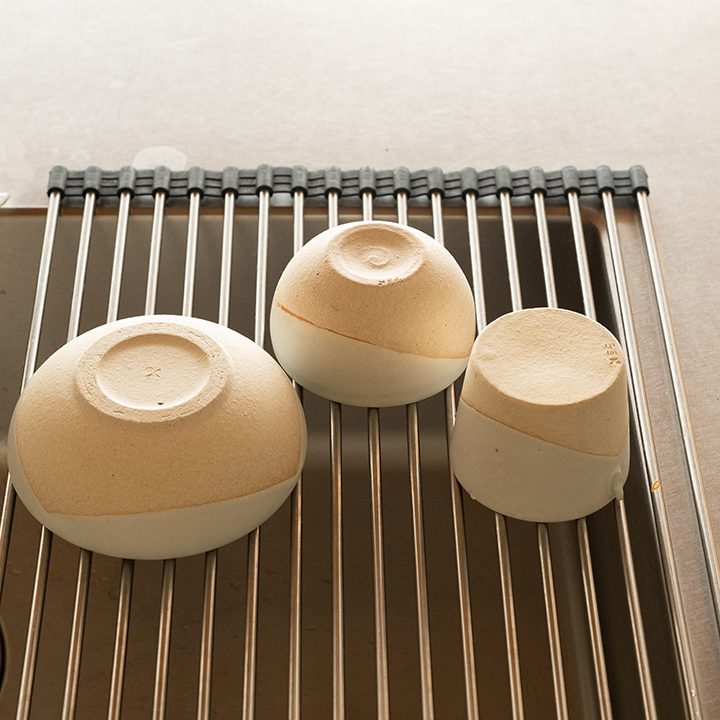
Dry Thoroughly After Washing
Proper drying is also very important.
Even if pottery looks dry on the surface, moisture may remain inside.
Storing it while still damp, especially in a closed cupboard, can lead to mold or dark spots.
Allow enough time for thorough drying before putting your pieces away.
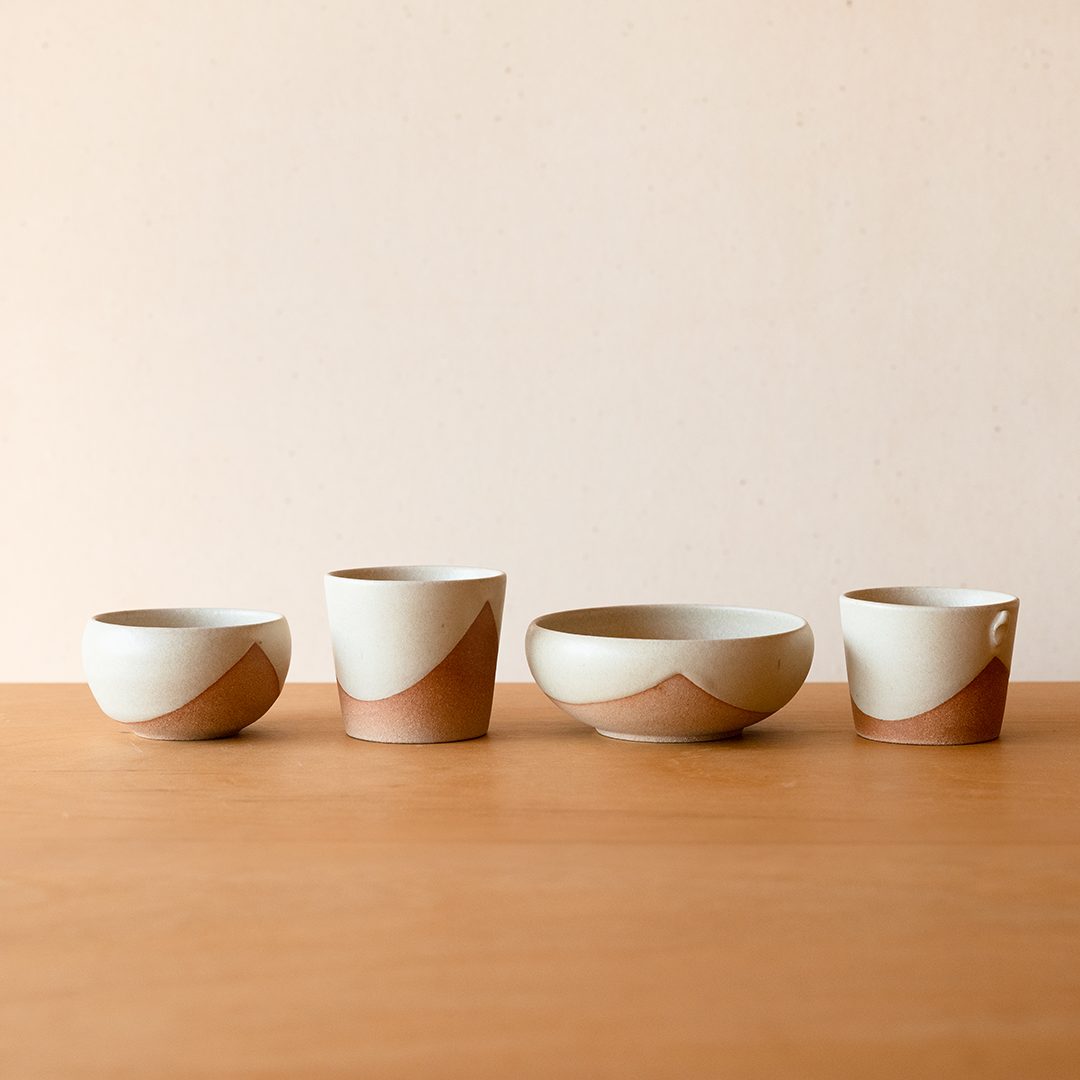
Embracing the Nature of Pottery
Pottery, made from earth itself, is a material that resists complete control.
Both in making and in using it, there is always an element of unpredictability.
Yet that very quality — its texture, warmth, and connection to the natural world — brings a quiet joy to everyday life.
It may take a little extra care, but we hope you’ll come to see that as part of its charm, and enjoy the way it changes gently over time.